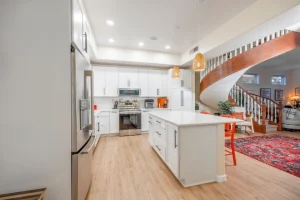
The Costs That Sneak Up on Your Dream Kitchen
Why does a kitchen remodel cost so often increase once construction begins? And why do so many homeowners feel caught off guard by unexpected expenses during a kitchen renovation?
This guide breaks down the most common hidden kitchen remodel costs, explains why they happen, and shows where homeowners overlook them.
By the end, you’ll know how to plan ahead, build a contingency fund, and avoid hidden costs that could derail your carefully planned kitchen remodel.
Hidden Kitchen Remodel Costs to Be Aware Of
- Structural and layout modifications.
- Flooring changes and corrections.
- Makeup air and ventilation systems.
- Electrical and plumbing brought up to code.
- Cabinetry upgrades and storage add-ons.
- Appliance installation and coordination.
- Water damage and mold remediation.
- Pest and termite damage.
- Hazardous material removal.
- Change orders and scope changes.
- Temporary kitchens and dining out.
- Pet care during construction.
- Temporary relocation costs.
- Homeowner time and project management burden.
The kitchen remodel budget breakdown.
1. Structural and Layout Modifications
Cost impact varies widely and depends on the scope of structural changes required.
Structural work becomes necessary when load-bearing walls, weak floor joists, or outdated framing are uncovered after demolition begins. This is especially common in older homes near the Downtown Tucson Historic District, where kitchens were not designed for modern layouts, larger kitchen islands, or heavy natural stone countertops.
Structural surprises often trigger additional electrical work, plumbing reroutes, inspections, and engineering.
Because these changes affect multiple systems at once, they can significantly impact the total kitchen remodeling cost and extend timelines if discovered late in the remodeling process.
Frei Remodel and Design reduces structural surprises by front-loading project definition and performing in-home evaluations before finalizing scope. By reviewing layout constraints, wall locations, and framing conditions early, potential issues like load-bearing walls or weak floor joists are more likely to be identified before construction begins.
2. Flooring Changes and Corrections
Floor patching typically costs $200–$800, while full flooring replacement can range from $2,000–$10,000.
Flooring issues appear when cabinets, islands, or walls are removed, and existing flooring stops short or cannot be matched. In neighborhoods around Reid Park, it’s common to uncover older flooring materials that no longer exist or can’t be extended cleanly.
Once flooring changes are required, materials costs and labor costs increase quickly.
If the decision happens mid-project, it often leads to additional delays and higher overall kitchen renovation costs.
Frei Remodel and Design uses pre-construction walkthroughs and site protection planning to minimize damage to existing flooring during demolition. Evaluating how cabinets, walls, and islands interact with existing flooring helps limit unplanned flooring replacement once work begins.
The best flooring for kitchens in Tucson.
3. Makeup Air and Ventilation Systems
Installing a makeup air system typically costs $3,000–$7,000.
High-powered range hood systems paired with modern appliances often exceed airflow limits, requiring makeup air to bring fresh air back into the home. This is a safety requirement tied to building codes and local regulations.
Many homeowners don’t learn about this requirement until electrical systems and mechanical planning are already underway, making it one of the most common hidden costs in kitchen remodeling.
Frei Remodel and Design accounts for ventilation requirements during appliance planning rather than after installation. By reviewing range hood specifications and mechanical needs early in the remodeling process, airflow requirements can be addressed before electrical and mechanical work is underway.
4. Electrical and Plumbing Brought Up to Code
Costs vary based on the condition of existing systems, but commonly fall around $3,000–$8,000+.
Once walls are opened, outdated wiring, undersized panels, and old plumbing connections must be updated to meet current building codes. Homes near Fourth Avenue often have electrical systems that weren’t designed for modern appliances, new lighting fixtures, or expanded outlet requirements.
These upgrades are unavoidable once discovered and directly tied to the safety, performance, and long-term reliability of your kitchen remodeling project.
Frei Remodel and Design incorporates code awareness into early project planning, recognizing that once walls are opened, outdated wiring and plumbing must meet current standards.
5. Cabinetry Upgrades and Storage Add-Ons

Semi-custom cabinets typically cost $200–$500 per linear ft., while custom cabinets range from $500–$1,200 per linear ft.
Cabinet upgrades often happen after homeowners see the space take shape and realize stock cabinets or basic layouts won’t meet their storage needs. Features like pull-out organizers, built-in pantry systems, and specialty cabinetry are rarely included in base pricing.
When added later, these upgrades commonly add $2,000–$15,000+ to the total budget, making cabinetry one of the most significant hidden expenses in a kitchen remodel.
Frei Remodel and Design emphasizes locking cabinet layouts, storage features, and material selections before scheduling construction. Finalizing decisions early helps limit mid-project cabinetry upgrades that often increase materials costs and labor costs once installation is underway.
Popular kitchen cabinet colors and styles.
6. Appliance Installation and Coordination
Installation and coordination costs typically run $1,000–$5,000+, depending on the appliance package.
High-end appliances require more than basic installation.
Professional-grade ranges, oversized refrigerators, and built-in units often need electrical upgrades, gas line adjustments, and plumbing modifications.
Supply chain issues and delayed deliveries can extend the project timeline, increasing temporary living expenses and pushing the total project cost higher.
Frei Remodel and Design coordinates appliance selections alongside cabinet design and utility planning to reduce installation conflicts. Aligning delivery timelines, electrical work, and plumbing connections early helps avoid delays tied to appliance lead times and supply chain issues.
7. Water Damage and Mold Remediation
Water damage and mold remediation commonly cost $2,000–$6,000+.
Moisture problems are frequently discovered behind cabinets, beneath sinks, or under existing flooring.
Homes near washes or older infrastructure, similar to areas around Sabino Canyon, are particularly susceptible.
Because mold presents health risks, remediation must happen immediately, often pausing construction and adding unforeseen expenses to the remodeling project.
8. Pest and Termite Damage
Termite treatment often costs under $1,000, with additional repair costs depending on damage severity.
Pest damage is commonly hidden inside walls or framing and may not be visible until demolition begins.
Even minor infestations can weaken structural elements over time.
Once discovered, repairing damaged framing adds extra costs and can significantly impact the total project cost if multiple areas are affected.
9. Hazardous Material Removal
Minor hazardous material removal typically costs $1,500, while extensive remediation can exceed $10,000+.
Older kitchens may contain asbestos or lead-based materials that must be removed to ensure safety and comply with regulations.
These materials cannot be disturbed or ignored once uncovered.
10. Change Orders and Scope Changes
Costs vary depending on timing and scope, but change orders almost always increase the total budget.
Change orders occur when structural surprises are discovered, materials become unavailable, or homeowners change their minds mid-project. Even small changes can ripple through labor schedules, materials orders, and inspections.
Mid-project changes are one of the biggest sources of unexpected costs because they disrupt workflow and often require rework.
Frei Remodel and Design minimizes change orders by requiring budget, materials, and scope approval before contract signing. Clearly defining expectations before construction begins reduces mid-project changes that typically drive unexpected costs and project delays.
11. Temporary Kitchens and Dining Out
Dining out during a 7-week remodel can total around $3,000 for a family.
Without a functioning kitchen, many homeowners rely on takeout or restaurants for an extended period.
While each meal feels manageable, the cumulative cost quietly becomes a significant hidden expense.
Temporary kitchen setups help, but they rarely eliminate these costs entirely.
Frei Remodel and Design prioritizes efficient scheduling to shorten the period homeowners are without a functional kitchen. Reducing project duration helps limit temporary living expenses like dining out and reliance on a temporary kitchen.
How to prepare for a kitchen remodel.
12. Pet Care During Construction
Costs vary depending on duration and level of care.
Noise, dust, and open work areas make job sites unsafe for pets. Many homeowners arrange boarding, daycare, or pet sitting during construction.
Over an extended remodel, pet care becomes another overlooked contributor to the total project cost.
13. Temporary Relocation Costs
Temporary relocation can cost roughly $148 per day.
Some kitchen renovations make staying in the home impractical, particularly during major electrical work or plumbing shutdowns.
Short-term housing costs add up quickly over an extended period.
Frei Remodel and Design builds a full production schedule before work begins so homeowners understand the duration and intensity of construction. Clear timelines help homeowners plan realistically for short-term relocation when necessary.
14. Homeowner Time and Project Management Burden
This cost doesn’t appear on an invoice, but it still impacts the project.
Coordinating decisions, managing access, handling disruptions, and responding to questions takes time and energy.
Many homeowners underestimate how demanding a kitchen remodeling project can be.
Clear planning, early material selections, and an organized remodeling process help reduce this burden and keep the project moving smoothly.
Frei Remodel and Design follows a defined remodeling process that includes pre-job walkthroughs, clear scheduling, and consistent communication. This structure reduces decision fatigue and limits the time you’d spend managing day-to-day construction details.
Outsmart Hidden Expenses with Frei Remodel and Design
Frei Remodel and Design helps homeowners navigate hidden kitchen remodel costs by emphasizing upfront planning, early inspections, and clear decision-making before construction begins. By addressing structural risks, system upgrades, and material coordination early, our team helps prevent the unexpected expenses that often derail a kitchen remodeling project.
If you’re ready to move forward with a kitchen renovation that’s planned realistically and built to avoid costly surprises, fill out our contact form today or give us a call.
Let Frei Remodel and Design help you protect your budget and move confidently toward your dream kitchen.